

FC Barcelona Communication: 5 Lessons Every Business Can Learn
Few organisations in the world attract as much public attention as FC Barcelona, one of the most internationally recognised football clubs. Every decision, statement and even silence can become headline news. FC Barcelona communication operates in a demanding environment where reputation, public opinion and emotions are constantly at stake.
But what can a global football club teach businesses about communication?
In the sixth episode of Vasos Comunicants, the communication podcast produced by Radiofònics, we explore this question with Gabriel Martínez, Director of Communications at FC Barcelona. During the conversation, he shares his professional experience and reveals the strategies behind communicating for one of the world’s most followed sports organisations.
The episode also offers valuable insights for businesses, communication professionals and anyone interested in understanding how effective communication works behind the scenes.
What is Vasos Comunicants? A podcast about communication in Catalonia
Vasos Comunicants is a podcast by Radiofònics in which, in each episode, a communications director (known as a dircom) shares their professional journey and the lessons they have learned along the way. The aim is to offer practical conversations that listeners can take inspiration from and apply to their own professional lives.
The format combines three main parts:
The guest’s professional journey, exploring their career path and how they got to where they are today.
A conversation about their organisation: its challenges, team structure, crisis management and relationships with the media.
A final round of advice, featuring more direct questions about what you won’t find in textbooks, common mistakes journalists make and recommendations for those who are new to the role.
Episode 6 focuses on FC Barcelona’s communications strategy and its Director of Communications, making it one of the most comprehensive episodes in the series.
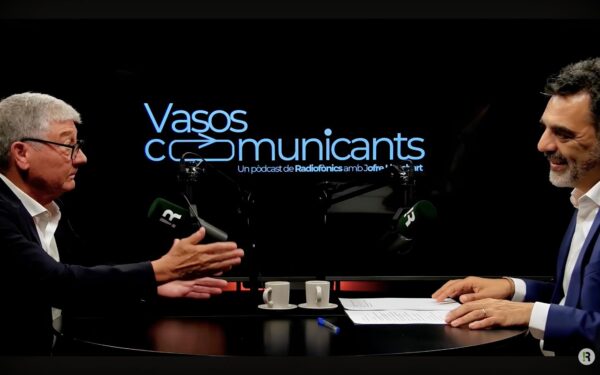
Who is Gabriel Martínez, FC Barcelona's Director of Communications?
Before joining FC Barcelona, Gabriel Martínez spent more than thirty years as Director of Communications at Banco Sabadell, one of Spain’s leading banking institutions and a company listed on the IBEX 35, Spain’s benchmark stock market index.
Interestingly, his academic background is in economics rather than journalism. He considers this an advantage: when communicating with financial journalists, his understanding of the subject allowed him to explain complex issues with confidence and credibility.
He describes his move to FC Barcelona as a natural next step. As a lifelong Barça supporter and football enthusiast, he saw the opportunity as a chance to enjoy his work in a completely different environment.
Today, he leads communication for a club with an estimated 500 million followers worldwide, according to the club’s internal figures.
When asked which organisation is more challenging to manage from a communications perspective, a major banking institution or FC Barcelona, his answer is revealing: both are complex, but Barça has something unique. It is «a factory of emotions», not simply an organisation focused on financial results.
5 lessons from FC Barcelona communication that every business can apply
1. Communication must have a seat at the decision-making table
For Martínez, the Director of Communications must be part of an organisation’s senior leadership team, working closely with its top executives and governing bodies.
This is not about status or hierarchy. It is about identifying reputational risks and communication opportunities before they become problems.
When communication teams report to departments such as Marketing or Human Resources, or only receive information after decisions have been made, their ability to act strategically becomes limited.
What this means for your business: If your communication team only finds out about important decisions once they have already been made, reputation management will always be reactive rather than proactive.
2. Be available and never lie to journalists
One of Martínez’s fundamental principles is being available 365 days a year and knowing the organisation inside out.
At FC Barcelona, this commitment takes on an entirely different dimension. While financial markets close at weekends, football activity often intensifies during those days because of matches and sporting events.
He is equally clear about the importance of honesty: lying to a journalist destroys credibility. And without credibility, a communications director loses one of their most valuable professional assets.
His advice is simple: if you cannot tell the truth about something, it is better not to answer than to lie.
3. Journalists are allies, not enemies
One of the most valuable lessons Martínez shares is the importance of building relationships based on trust and mutual understanding with journalists.
Behind every media outlet is a person. Developing a professional relationship means understanding this human side, maintaining open communication and creating an environment where both parties can work effectively.
When asked what professional legacy he would like to leave at FC Barcelona, he highlights professionalism, trust, availability and accessibility between the club and the media.
This principle applies to every organisation, regardless of its size or industry.
4. Teamwork, organisational trust and media relations go hand in hand
FC Barcelona’s Communications Department is organised into different areas, covering the first football team, other sporting sections, the club’s foundation and corporate affairs.
However, an effective communication strategy requires more than a well-organised department. It also depends on the trust of senior management, the board and the journalists who follow the organisation.
Martínez describes these three elements as the foundations of successful communication.
The challenge at FC Barcelona is particularly complex because the club communicates on several levels simultaneously: as a sports organisation, as an important institution in Catalonia and as one of Europe’s leading football clubs.
For businesses, the lesson is clear: communication only works when everyone involved understands the organisation’s objectives and works towards the same message.
5. Crisis management: always be prepared
A crisis rarely gives you advance notice. That is why Martínez believes the communications team must always be ready to respond, including during holidays and weekends.
The people responsible for managing the first stages of a crisis need to be reachable, coordinated and able to act quickly.
However, he also highlights an important idea: the best crisis is the one that never happens.
Preparation, anticipation and having clear protocols in place can make all the difference when an unexpected situation arises.
For any business, having a crisis communication plan is not optional. It is an essential part of protecting its reputation.

Conclusion: What FC Barcelona communication can teach your business
FC Barcelona operates under an extraordinary level of public scrutiny, but the principles behind FC Barcelona communication are relevant to organisations of every size.
Gabriel Martínez’s experience highlights five essential lessons: involve communication in strategic decisions, always be honest, build strong relationships with journalists, work as a coordinated team and prepare for crises before they happen.
You do not need 500 million followers or an internationally recognised brand to put these principles into practice. You need professional expertise, consistency and good judgement.
Ultimately, communication is not simply about managing what an organisation says. It is about building and maintaining trust with customers, employees, partners and the media.
Want to improve communication within your organisation?
At Radiofònics Empresa, we help businesses, executives, spokespersons and professional teams strengthen their communication skills.
We design tailored training programmes covering effective communication, leadership, public speaking, active listening, media relations and crisis management.
Our programmes are delivered by active journalists and communication professionals and follow a 100% practical approach. Through simulations, recorded exercises and personalised feedback, participants develop skills they can apply directly to their everyday professional lives.
Discover how we can help your organisation communicate with greater confidence, impact and effectiveness: